Advanced Active Catheter Securement for a More Intelligent Response to Traction
A Foley catheter may be correctly inserted, appropriately secured, and carefully managed—and still become a patient-safety concern when unexpected pulling occurs.
And when significant force is transmitted against an inflated retention balloon, passive securement alone may not address the full risk.
Foley-Safe introduces a different approach.
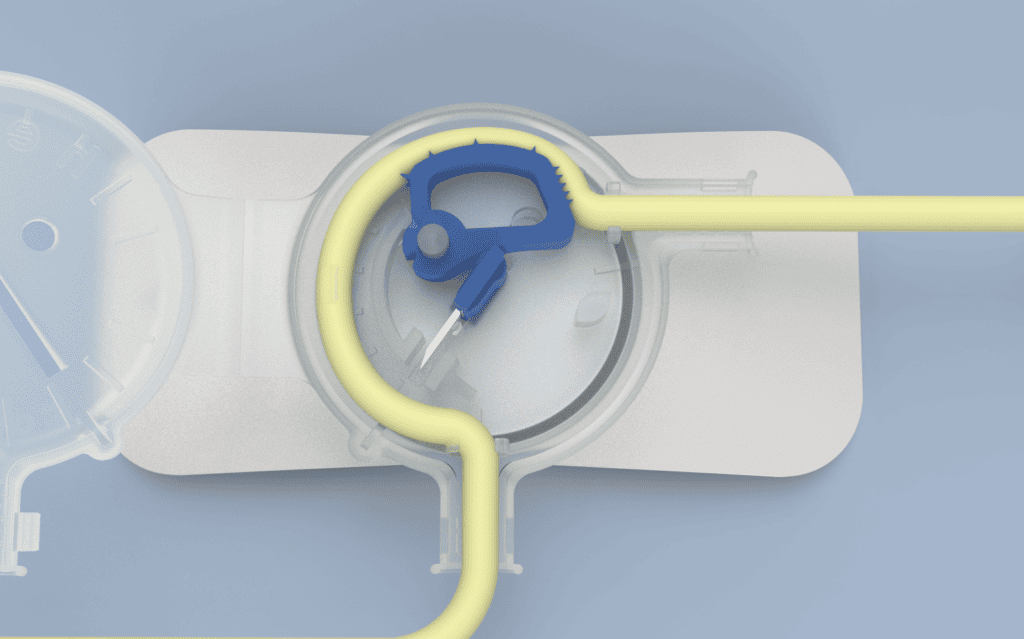
Secure during routine care.
Helps stabilize the catheter and minimize unnecessary movement.Designed to respond.
An integrated mechanism engages before an inflated balloon is forcibly pulled.Patented TechnologyProfessional UseTraction-Responsive Design
Securement has evolved
Traditional catheter securement devices are primarily designed to keep the Foley catheter in position.
That remains important.
But Foley-Safe addresses another question:
Developed by Cathetrix Ltd., Israel, Foley-Safe is a patented catheter securement device engineered to:
Help minimize unnecessary catheter movement during routine care.
Support catheter positioning during movement, repositioning, and normal bedside activity.
Provide an active mechanical response when significant traction threatens accidental or unintended catheter extraction.
This is the distinction behind Foley-Safe.
Not simply stronger fixation. A more intelligent response to changing levels of force.
Three layers of protection
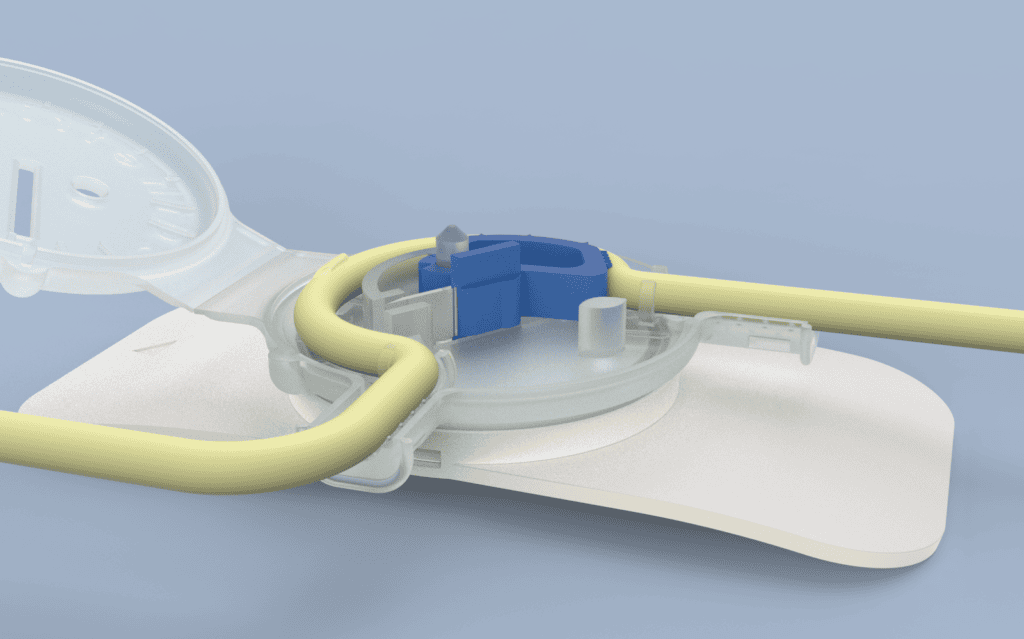
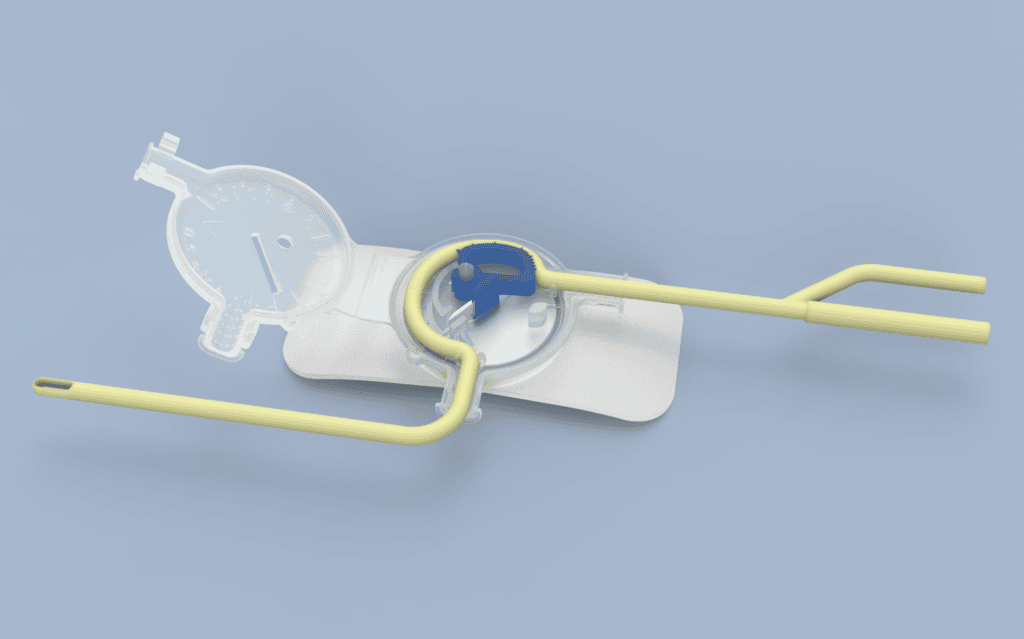
An adhesive securement platform anchors the Foley catheter to the patient’s thigh.
During normal care, Foley-Safe helps stabilize the catheter while allowing the clinical team to maintain an organized catheter-management system.
Routine patient movement does not always require a safety mechanism to activate. Foley-Safe is designed to help minimize unnecessary catheter movement during:
The objective is controlled securement during ordinary conditions.
This is where Foley-Safe becomes fundamentally different.
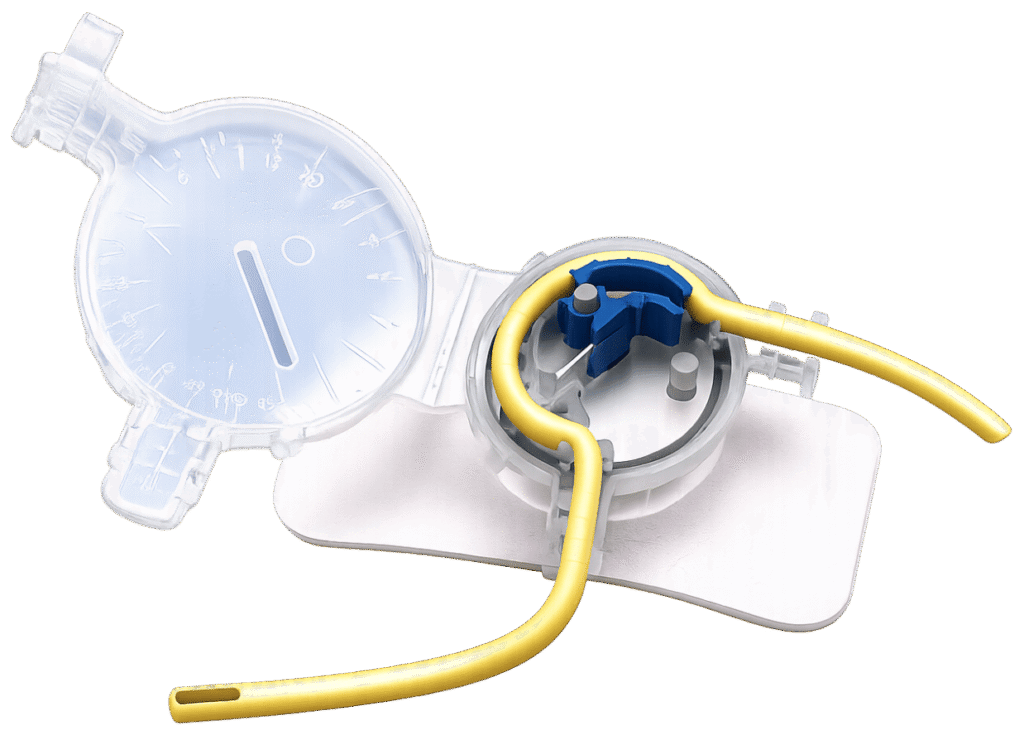
When significant traction reaches the point where catheter dislodgement would otherwise occur, Foley-Safe’s integrated cutting mechanism is designed to sever the catheter lumen.
This allows the Foley retention balloon to deflate.
The objective is to help reduce the risk of an inflated retention balloon being forcibly pulled through the urethra.
See how Foley-Safe secures the catheter during routine care—and how its integrated mechanism is designed to respond when significant traction occurs.
Why this matters
A Foley catheter is retained inside the bladder by an inflated balloon.
During normal catheterization, that balloon performs an essential function.
During significant traction, however, the same balloon may become a point of resistance.
Potential traction events can occur during:
A forceful pull against an inflated retention balloon may be associated with pain, bleeding, traumatic extraction, reinsertion, and additional clinical intervention.
“Is the catheter secured?”
“How does the securement system respond when routine movement becomes significant traction?”
Passive fixation is valuable during routine catheter management.
But high-force traction creates a different clinical challenge.
During an excessive pulling event, force may continue to be transmitted toward vulnerable tissue.
The catheter may still be displaced traumatically.
Secure appropriately during routine conditions. Respond differently when the force becomes excessive.
Its active mechanism is designed to engage when significant traction threatens accidental or unintended extraction.
That is the difference between passive securement and active catheter protection.
Designed around real patients
Some patients cannot reliably protect their catheter.
Foley-Safe is intended for adult patients with indwelling urinary catheters and may be particularly relevant for appropriately selected patients at increased risk of inadvertent catheter movement or possible extraction.
Potential patient profiles include:
Where cognition or awareness may increase the likelihood of unintended traction.
Where catheter position may not be reliably recognized or protected.
Where additional catheter-management considerations may be appropriate.
Where repeated movement and prolonged exposure create ongoing securement considerations.
Where clinical assessment identifies increased risk of unintended pulling or catheter displacement.
Patient selection remains a professional clinical decision.
Choose your role to see what matters most when evaluating Foley-Safe.
Evaluate Foley-Safe in relation to:
Catheter safety is managed at the bedside every day.
Product orientation can include:
A premium catheter securement system should be assessed not only on whether it holds—but on what clinical and operational capability it adds.
Consider:
Patients receiving catheter care at home may move unpredictably, experience confusion, or unintentionally pull on drainage tubing.
Foley-Safe may be considered for appropriately selected adult patients receiving professional catheter care in home-use environments.
Correct patient selection, placement, monitoring, and adherence to the current Instructions for Use remain essential.
Advanced by design
The difference is not merely how securely the catheter is held. It is how the system is engineered to respond when securement reaches its limit.
Holding · helps control motion
Holding · helps stabilize the catheter
Premium technology should be documented
Foley-Safe’s underlying technology is supported by an international patent portfolio including:
US 9,402,972
EP 3049142
ZL 201480072281.X
CA 2929289
The patented concept includes a catheter add-on incorporating a mechanism adapted to sever the catheter in response to a predefined pulling force.
Foley-Safe is also supported by documented regulatory, quality, technical, and risk-management information, including:
Documented technology for professional evaluation.
Product compatibility
According to the current Instructions for Use, Foley-Safe is intended for:
The device should be replaced after activation.
Always refer to the current Instructions for Use and applicable institutional or clinical protocols before use.
Request Current IFUThe value extends beyond the device
A significant catheter event may require more than catheter replacement.
Depending on the clinical circumstances, it may also lead to:
Foley-Safe should therefore be evaluated not simply as a catheter holder.
It is an active catheter-safety technology designed around a specific clinical risk.
No catheter securement device can guarantee a specific clinical outcome.
Foley-Safe should therefore be evaluated according to its documented intended function:
To help minimize catheter movement and provide a mechanical safety response when significant traction threatens accidental or unintended catheter extraction.
See Foley-Safe in practice
Understanding the concept is important.
A professional demonstration can show:
Foley-Safe is a catheter securement device with an integrated cutting mechanism designed to help minimize catheter movement and provide an active response when significant traction threatens accidental or unintended Foley catheter extraction.
Traditional catheter securement is mainly passive.
Foley-Safe adds a traction-responsive mechanical function.
When significant pulling force reaches the point where catheter dislodgement would otherwise occur, the internal mechanism is designed to sever the catheter lumen and allow the inflated retention balloon to deflate.
The integrated mechanism is designed to sever the catheter lumen only in the defined high-traction circumstance described in the product documentation—when significant pulling force threatens catheter dislodgement.
This enables balloon deflation and changes how the catheter responds to the traction event.
The Foley retention balloon normally keeps the catheter positioned within the bladder.
During significant traction, however, an inflated balloon may become a point of resistance.
Foley-Safe’s mechanism is designed to allow the balloon to deflate during activation, with the objective of reducing the risk associated with forcible extraction of an inflated balloon through the urethra.
No.
Foley-Safe is intended for appropriately selected adult patients with indwelling urinary catheters.
Patient condition, catheter configuration, skin integrity, clinical environment, and other factors should be assessed by the healthcare professional.
The current Instructions for Use specify 2-way Foley catheters from 12–16 Fr.
No.
The current Instructions for Use state that Foley-Safe should not be used with 3-way catheters.
No.
Foley-Safe is a single-use device.
After activation, it should be discarded and replaced if continued catheter securement is required.
When significant pulling force activates the mechanism, the catheter lumen is designed to be severed, allowing the retention balloon to deflate.
The catheter should then be managed by a caregiver according to the current Instructions for Use and applicable clinical protocol.
No medical device should be represented as guaranteeing zero injury.
Foley-Safe is designed to help reduce the risk associated with significant catheter traction and accidental or unintended extraction.
Yes.
Clinical, procurement, nursing, quality, and technical stakeholders may request appropriate documentation for institutional evaluation.
Yes.
Healthcare institutions and appropriate professional users may request an orientation or product demonstration.
Different organizations may begin at different stages.
Review how active traction-responsive securement works.
Schedule a professional product demonstration.
Request product information, compatibility, Instructions for Use, regulatory information, quality documentation, and supporting materials.
Discuss institutional evaluation, implementation, and volume requirements.
Request commercial information and a formal quotation.
Foley-Safe
The next generation of catheter securement is not just about holding tighter.
When Securement Alone Is Not Enough.
Talk to our team about clinical information, documentation, a demonstration or a quotation.
Request InformationSchedule a DemonstrationRequest Foley-Safe information
Choose who you are and what you would like to receive. Our team will respond with the appropriate clinical, technical or commercial information.
Foley-Safe — Active Catheter Securement for a More Intelligent Response to Traction. Developed by Cathetrix Ltd., Israel. For professional healthcare use.
Foley-Safe should be used only according to the current Instructions for Use, applicable institutional policies, and appropriate clinical judgment. No medical device can guarantee prevention of catheter-related injury or a specific clinical outcome.